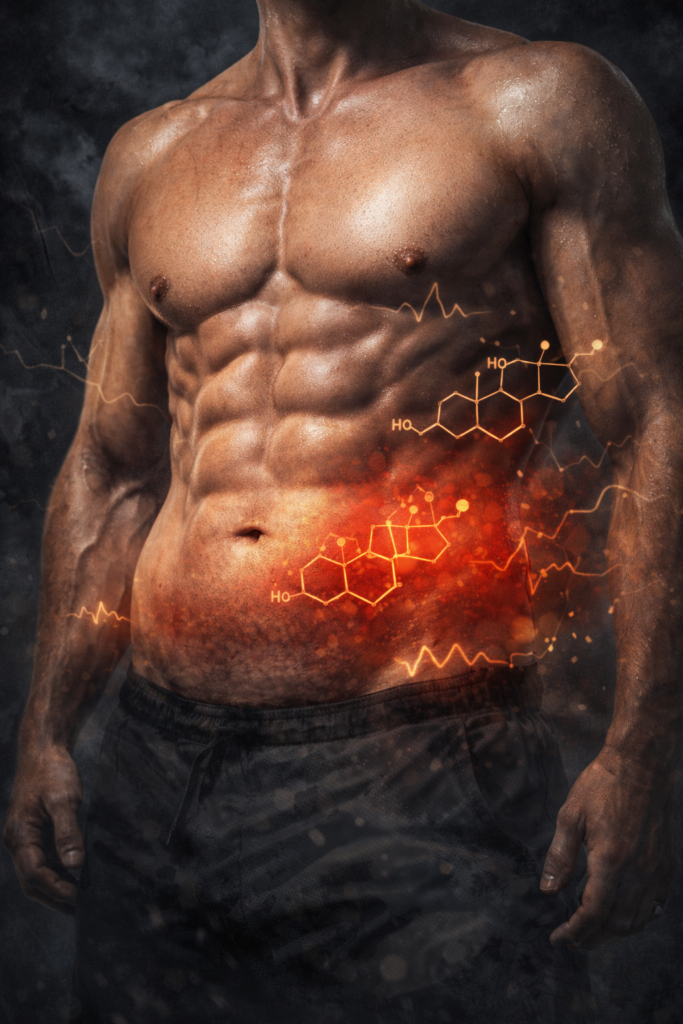

The Truth About Cortisol and Stubborn Belly Fat: Why Stress is Killing Your Six-Pack
Table of Contents
We’ve all been there. You’re hitting your RPT sessions, you’re sticking to your fasting window, and you’re eating your protein. Your arms are looking more defined, your chest is popping, but that last layer of fat on your lower abs just… won’t… budge.
In the past, my reaction to this was to “push harder.” I’d add more cardio, cut more calories, and sleep less to get it all done.
The result? I actually looked softer. My muscles felt flat, and my stomach looked more bloated than before. That was my first real encounter with the “Cortisol Trap.” At aggressivefatloss.com, we don’t just train the muscles; we manage the hormones. Here is the truth about why stress might be the only thing standing between you and a shredded midsection.
What is Cortisol, Anyway?
Cortisol is often called the “stress hormone.” In small doses, it’s great—it helps you wake up in the morning and gives you the energy to lift heavy weights.
But when cortisol is chronically high due to lack of sleep, work stress, and “aggressive” dieting, it becomes a nightmare for fat loss. High cortisol causes your body to hold onto water (making you look “soft” or “blurry”) and can actually encourage fat storage specifically in the abdominal area.
The “Swoosh” Effect
Have you ever noticed that after a “cheat meal” or a day of rest, you suddenly look leaner the next morning? That’s not magic; it’s the Swoosh Effect.
When you relax, your cortisol levels drop. Your body finally releases the water it was holding in your fat cells, and—swoosh—you look tighter. I’ve learned that sometimes, the best way to lose fat is to actually do less, not more.
How I Keep My Cortisol in Check
To keep my body in a “fat-burning” state rather than a “stress-storage” state, I follow these three non-negotiable rules:
- Prioritize 7-9 Hours of Sleep: Sleep is the ultimate cortisol killer. If I have to choose between an extra hour of sleep or a 5 AM cardio session, I will choose the sleep every single time.
- Stop Over-Training: This is why we only lift 3 days a week on the Greek God program. Heavy RPT is a stressor. Your body needs those 4 days off to bring cortisol back down so your muscles can actually grow.
- The “Chill” Walk: I don’t do high-intensity interval training (HIIT) on my off days. I take long, relaxing walks. It’s a form of “active recovery” that lowers stress while still burning calories.

Don’t Panic When Progress Stalls
If the scale hasn’t moved for 10 days but you know you’re in a deficit, don’t drop your calories further. You’re likely just holding water. Stay the course, get some extra sleep this weekend, and wait for the “swoosh.”
Summary
Your body is not a calculator; it’s a biological system. If you treat it like a machine and redline it 24/7, it will fight back with high cortisol. Relax, trust the process, and remember that rest is just as “aggressive” for fat loss as the gym is.
Chronic stress doesn’t only come from work or lack of sleep—it often sneaks in through social situations involving food. Trying to stay shredded while constantly stressing over meals with family, friends, or colleagues can actually spike cortisol levels, making stubborn belly fat even harder to lose. That’s why learning how to manage social eating without triggering guilt or anxiety is critical for keeping cortisol in check and protecting your six-pack. If you want a practical strategy to stay on track without isolating yourself or ruining your fat-loss progress, check out this guide on how to eat socially without losing fat loss progress.
Have you ever experienced the “Swoosh Effect” after a rest day? Or do you find yourself getting stressed when the scale doesn’t move? Let’s talk about the mental game in the comments!